Casablanca isn’t just about the famous mosque or old medinas—there’s a whole hidden side few travelers ever see. I stumbled upon viewpoints most maps don’t show, where the Atlantic meets urban life in the most breathtaking way. From quiet rooftop escapes to unexpected coastal lookouts, these spots gave me a whole new perspective—literally and emotionally. If you're chasing authentic moments over crowds, keep reading. This is Casablanca like you’ve never imagined.
Beyond the Postcard: Rethinking Casablanca
Casablanca often appears in travel itineraries as a brief stopover—a city of commerce, concrete, and cinematic nostalgia. Many visitors associate it solely with the iconic Hassan II Mosque or the black-and-white romance of the classic film. But beneath this surface lies a more nuanced, vibrant reality. The true soul of Casablanca reveals itself not in guidebook highlights, but in the quiet moments between landmarks—when the light shifts, the sea breeze lifts, and you find yourself seeing the city from a new angle. These secret viewpoints are not just scenic; they are transformative.
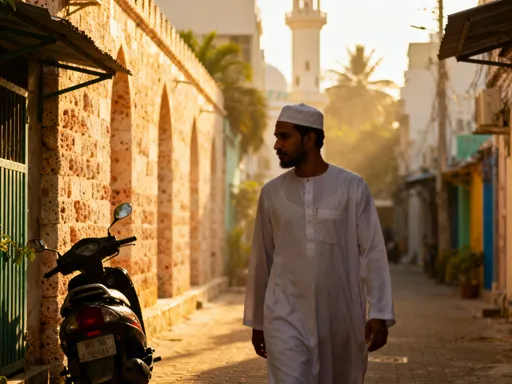
What makes a viewpoint “secret” is not merely its absence from maps, but its ability to offer intimacy, stillness, and a sense of discovery. These are places where the rhythm of daily life unfolds beneath you—the call to prayer echoing over rooftops, fishermen mending nets along the shore, families strolling the promenade as the sun dips below the horizon. When you elevate your gaze, you also elevate your understanding. You begin to see Casablanca not as a backdrop, but as a living, breathing metropolis with layers of culture, history, and beauty waiting to be noticed.
For the thoughtful traveler—especially those who value reflection, authenticity, and emotional connection—these hidden vantage points offer something rare: a chance to slow down and truly see. They invite you to move beyond the curated experience and engage with the city on a personal level. And while Casablanca’s grand architecture and bustling markets deserve attention, it is from above, from the edge, from the overlooked corners, that its most profound stories are told.
The Rooftop Revelation: A Local’s Skyline Escape
Nestled within the winding alleys of the Habous Quarter, where the scent of orange blossoms lingers in the air and whitewashed walls glow under the afternoon sun, lies a quiet rooftop café known more to residents than to tourists. This unassuming spot, accessible through a narrow staircase behind a traditional pastry shop, opens into a serene terrace overlooking the medina’s terracotta rooftops and distant minarets. Here, time seems to pause. The only sounds are the soft clink of tea glasses, the rustle of palm fronds, and the melodic call to prayer that drifts across the city like a gentle reminder of presence.
Sipping mint tea while seated on woven cushions, visitors are treated to a panoramic view that blends the old and the new—ancient domes beside modern apartment blocks, laundry lines strung between buildings like festive banners, and the occasional glimpse of the Atlantic shimmering in the distance. As the sun begins its descent, the sky transforms into hues of amber and rose, casting a golden glow over the entire quarter. This is not a staged photo opportunity; it is a living scene, unfolding naturally, without performance.
What makes this rooftop special is not just the view, but the sense of belonging it fosters. There are no entry fees, no crowds, and no pressure to consume. Locals come here to unwind, read, or share quiet conversations. For a traveler, especially one seeking connection over checklist tourism, this space offers a rare gift: inclusion without intrusion. It is a reminder that some of the most meaningful travel experiences come not from what you see, but from how you feel—seen, welcomed, and at peace.
Corniche by Dusk: Where Ocean Meets Urban Pulse
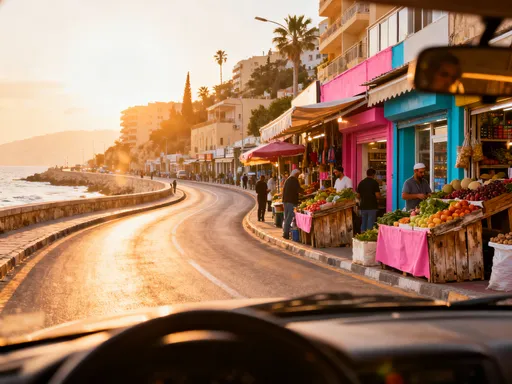
The Ain Diab Corniche is often described as Casablanca’s seaside playground, a stretch of coastline where the city’s energy meets the endless horizon of the Atlantic. By day, it buzzes with joggers, cyclists, and families enjoying the sea air. But it is during the late afternoon and early evening that the Corniche truly comes alive as a living viewpoint—a place where the natural and urban worlds converge in a symphony of light, motion, and sound.
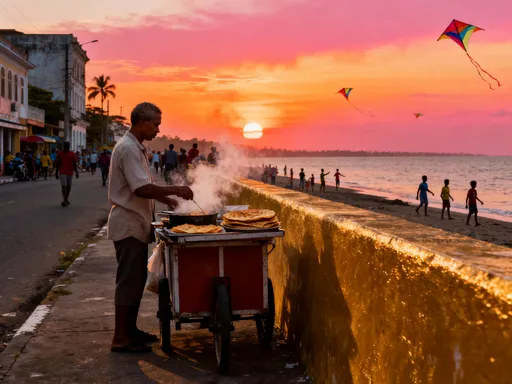
As the sun begins its slow descent, the atmosphere shifts. The golden light bathes the promenade in warmth, turning the ocean into a sheet of molten silver. Waves crash against the rocks with rhythmic intensity, their spray catching the fading light like scattered diamonds. Along the walkway, street vendors begin to set up, offering freshly grilled sardines, sweet mint tea, and warm msemen. Children laugh as they chase seagulls, while couples stroll hand in hand, silhouetted against the glowing sky.
This is not a passive view—it is an immersive experience. The Corniche offers no barriers between you and the scene; you are part of it. You can sit on a low wall, feet dangling above the water, and watch the city lights begin to flicker on across the bay. Or you can walk for miles, letting the ocean guide your thoughts. For those who appreciate the balance between solitude and connection, this stretch of coastline delivers both. It is a place to reflect, to recharge, and to remember that beauty often resides in the ordinary moments—a sunset, a breeze, a shared smile with a stranger.
The Forgotten Lighthouse: A Hidden Coastal Gem
Just south of the main Corniche, along a less-traveled coastal path, stands a modest lighthouse known locally as the Sidi Bou Abid beacon. Unlike its more famous counterparts, this structure is not a major tourist attraction. It has no ticket booth, no guided tours, and no prominent signage. In fact, many visitors pass by without even noticing it. But for those willing to step off the main path, this unassuming tower offers one of the most serene and powerful viewpoints in the city.
Reaching the lighthouse requires a short, leisurely walk from the nearest access point—a journey that takes you past quiet residential homes, clusters of wildflowers, and stretches of untouched coastline. The path is unpaved in places, adding to the sense of discovery. When you arrive, the lighthouse stands modestly against the sky, its white walls weathered by salt and wind. There is no fence, no gate, just a few stone steps leading to a small platform that offers a 270-degree view of the Atlantic.
From this vantage point, the ocean stretches endlessly, its waves rolling in with a hypnotic rhythm. On clear days, you can see fishing boats dotting the horizon, their silhouettes sharp against the light. The sound of the sea is amplified here, unfiltered by city noise, creating a meditative atmosphere perfect for quiet contemplation. Photographers will appreciate the natural lighting and dramatic contrasts, while introspective travelers may find this spot ideal for journaling or simply being still.
What makes the Sidi Bou Abid lighthouse special is its solitude. It is a place untouched by commercialization, where the only company you might have is a local fisherman or a passing dog walker. It represents the kind of discovery that travel is meant to inspire—not the ticking of boxes, but the joy of stumbling upon something real, unpolished, and deeply peaceful.
Art Deco Highs: Viewing the City Through Architecture
Casablanca is home to one of the most impressive collections of Art Deco architecture in Africa, a legacy of its early 20th-century development. While many visitors admire these buildings at street level, few consider how they can serve as vantage points for broader city views. Elevated intersections, wide boulevards, and multi-story residential buildings in neighborhoods like the Quartier Habous and the Triangle District offer unexpected sightlines that blend architectural beauty with urban panorama.
One particularly striking location is the intersection of Boulevard Mohammed Zerktouni and Rue d’Anfa, where a gentle rise in elevation provides a sweeping view of the city’s skyline. From here, you can see the intricate geometric facades of 1930s buildings, their curved balconies and sunburst motifs glowing in the late afternoon light. Above them, modern towers rise like sentinels, creating a visual dialogue between past and present. The contrast is not jarring—it is harmonious, a testament to Casablanca’s ability to evolve without erasing its history.
Walking these streets slowly, with eyes lifted, reveals more than just buildings. It reveals patterns—the way light plays across stucco walls, how shadows stretch across sidewalks, how people move through the urban fabric. Some older buildings have ground-floor cafés with upper-level terraces, where you can pause for a drink and take in the scene from above. These are not tourist traps; they are neighborhood institutions, frequented by locals who appreciate both comfort and view.
For travelers interested in design, history, or urban life, this architectural perspective offers a deeper understanding of Casablanca. It encourages a slower, more observant way of moving through the city—one that values detail, proportion, and the quiet beauty of everyday spaces. You begin to see the city not as a collection of landmarks, but as a living canvas shaped by time, culture, and human intention.
Practical Magic: How to Find Your Own Secret Spots
Discovering hidden viewpoints in Casablanca doesn’t require a secret map or insider connections. It begins with a shift in mindset—from seeking destinations to embracing exploration. The most rewarding moments often come when you allow yourself to wander without a fixed agenda, to follow a narrow alley just because it looks interesting, or to accept a local’s suggestion with curiosity rather than skepticism.
One of the simplest ways to uncover these spots is to talk to people. A shopkeeper, a café owner, or a fellow stroller on the Corniche might mention a favorite bench, a quiet garden, or a rooftop with a view. These recommendations are rarely found in guidebooks, but they are often the most authentic. Learning a few basic phrases in Arabic or French can open doors—and not just literally. A simple “Do you know a nice place to watch the sunset?” can lead to an unexpected invitation or a helpful gesture.
Timing also plays a crucial role. Early mornings and late evenings are ideal for exploration. The light is softer, the air cooler, and the city less crowded. During these hours, neighborhoods reveal their quieter rhythms—bakers preparing bread, fishermen returning with their catch, children playing in courtyards. These are the moments when Casablanca feels most alive and most intimate.
When venturing off the beaten path, it’s wise to travel light. A small backpack with water, a camera or smartphone, and a light jacket is all you need. Respect is equally important. Avoid entering private properties, refrain from loud behavior in residential areas, and always ask before photographing people. Remember, the goal is not to conquer the city, but to connect with it—gently, thoughtfully, and with gratitude.
Why Viewpoints Change Everything
There is something profoundly human about seeking high places. From ancient watchtowers to modern skyscrapers, we have always been drawn to elevated perspectives. In travel, these moments of height and distance do more than offer pretty pictures—they create space for reflection. When you stand above a city, you gain not just a wider view, but a deeper understanding. The noise fades, the details sharpen, and you begin to see patterns you might have missed at ground level.
In Casablanca, these secret viewpoints offer more than scenic rewards. They offer emotional clarity. They remind us that beauty exists in unexpected places, that connection is possible without words, and that slowing down is not a luxury—it is a necessity. Each of these spots—the rooftop café, the Corniche at dusk, the forgotten lighthouse, the Art Deco crossroads—represents a pause in the rush of daily life, a chance to breathe, to feel, to be present.
For the women who travel—not just as tourists, but as seekers, mothers, dreamers, and observers—these moments are especially valuable. They offer a rare kind of freedom: the freedom to be unseen yet fully aware, to move through a foreign city with quiet confidence, to gather memories that are personal, not performative. These are the experiences that stay with you long after the trip ends—the way the light fell on the water, the sound of the waves, the feeling of being exactly where you were meant to be.
So as you plan your journey to Casablanca, look beyond the postcards. Seek not just sights, but sightlines. Let the city surprise you. Wander with intention. Look up, look out, and allow yourself to be moved. Because sometimes, the most unforgettable views are the ones no one told you about.